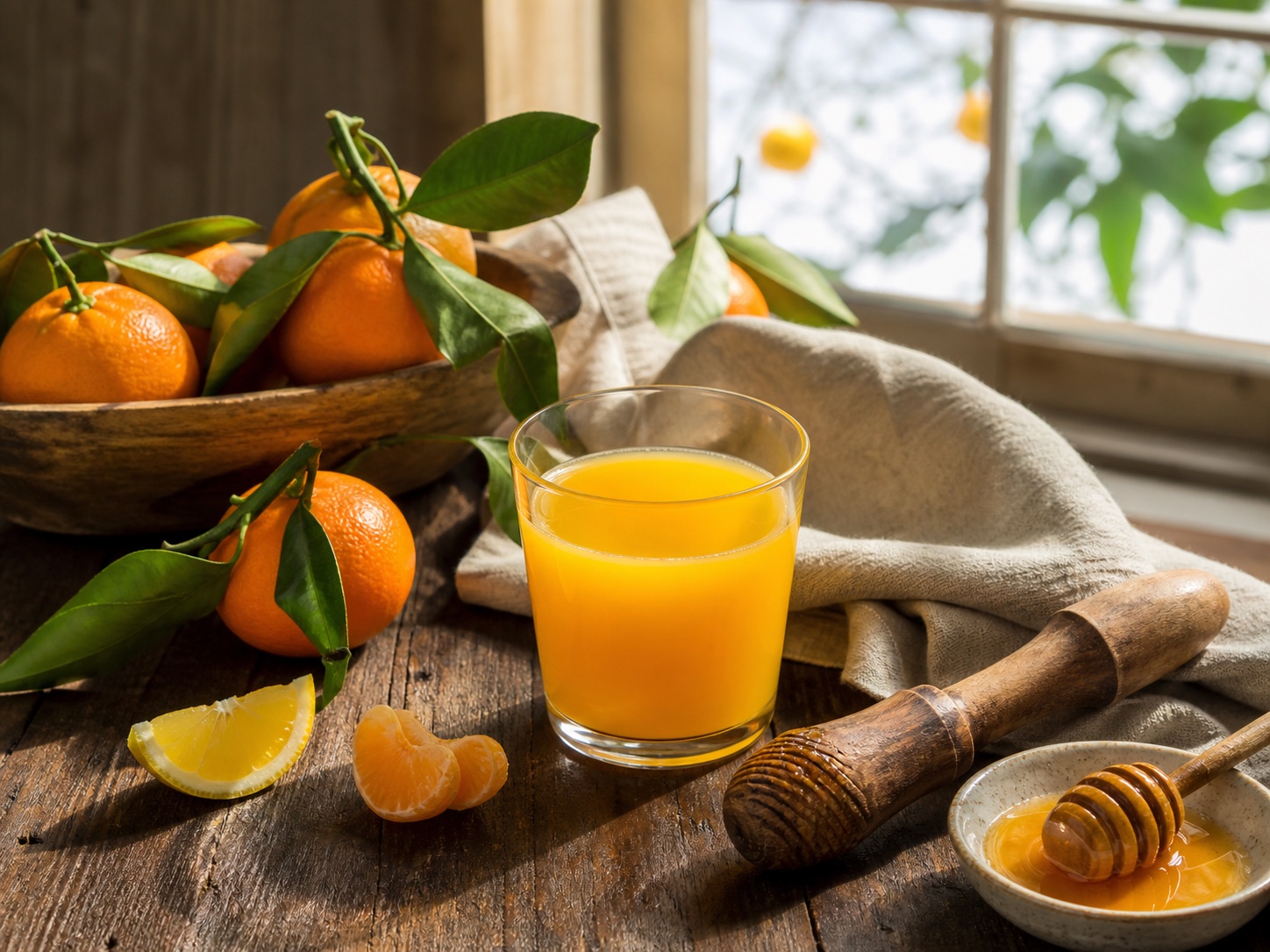
Tangerina
Poncha de Tangerina
Bright, sweet-tangy and seasonal — the island's lesser-known gem, made with fresh winter tangerines.
Bright, sweet-tangy and seasonal — the island's lesser-known gem, made with fresh winter tangerines.
Poncha is stronger than it tastes. Serve small measures, enjoy with food, and drink responsibly.
Put the fresh tangerine juice and honey into a small glass or jug.
Work the mexelote (caralhinho) up and down until the honey dissolves into the juice.
Add the aguardente de cana and a small squeeze of fresh lemon.
Spin the stick rapidly between your palms until light and frothy.
Pour into a small glass and serve immediately, without ice.
Here is a poncha the guidebooks tend to miss. Poncha de Tangerina is the island's lesser-known gem — a bright, sweet-tangy variation made with fresh tangerine juice, at its glorious best in the winter months when the fruit is ripe and perfumed. If you spot it on a menu, order it: you may not get the chance again until next season.
Unlike the year-round Maracujá, Poncha de Tangerina is tied to the calendar. Tangerines come into season in the cooler months, and that is when this poncha shines. There is something fitting about a warming, honeyed drink built around a winter fruit — it feels like exactly the right thing for a crisp evening in the hills. Built on the same base as Poncha Regional, it swaps the dominant lemon for the gentler, sweeter perfume of tangerine, with just a small squeeze of lemon to keep it lively.
Expect a glass that is bright and aromatic, sweeter than the lemon-forward Regional but with a tangy edge the orange version lacks. The tangerine gives it a fresh, almost floral lift; the honey rounds it out; the lemon keeps it from cloying. At around 22% ABV it is one of the more approachable ponchas — though, as ever, deceptively easy to drink.
This is winter poncha, made for cooler evenings and richer food. It is a lovely aperitif and a fine companion to a warming meal — see our pairings guide for ideas. Because it is seasonal, it is most likely to turn up in traditional tascas and vendas that squeeze their own fruit.
Poncha de Tangerina rewards the curious — those who have tried the Regional and the fruit standards and want something a little more special. If tangerines are out of season, reach instead for the year-round Laranja or Maracujá. And if you are still finding your way, our guide to what poncha is explains the essentials.
A bright, seasonal beauty — Poncha de Tangerina is the one in the know. Catch it in winter, and savour it slowly.